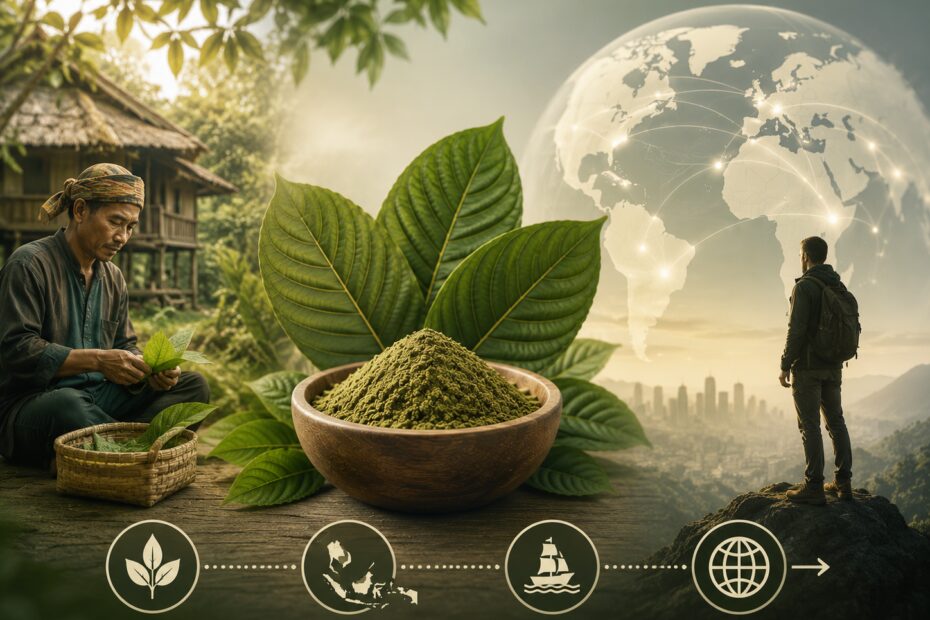
Introduction to the Sacred Leaf
Kratom, scientifically known as Mitragyna speciosa, has captured the attention of the modern wellness world. Today, it is packaged in sleek bottles, sold as finely ground powder, and discussed in scientific journals across the globe. However, long before it became a subject of debate in Western boardrooms and regulatory agencies, Kratom was a quiet, respected part of daily life in the lush rainforests of Southeast Asia. To truly understand this botanical specimen, one must journey back in time to explore its deep historical, cultural, and botanical roots.
For centuries, the indigenous peoples of Thailand, Malaysia, Indonesia, and Myanmar lived in harmony with the natural abundance of their tropical landscapes. Among the myriad of plants they utilized for survival and wellness, the Kratom tree held a place of distinct significance. Understanding the history of Kratom is not just an academic exercise; it is an exploration of how a simple leaf transitioned from a traditional farmworker’s aid to a highly sought-after global botanical.
Botanical Origins and Scientific Classification
The Kratom tree belongs to the Rubiaceae family, making it a close relative of the coffee plant (Coffea arabica). It thrives in wet, humus-rich soil and requires a humid, tropical climate with consistent rainfall to grow. In its natural habitat, a mature Kratom tree can reach heights of 12 to 30 meters, boasting broad, glossy green leaves with distinct vein transport networks that can be red, green, or white.
The Discovery by Western Science
While indigenous populations had been using the leaf for generations, Western science did not formally document the plant until the 19th century. The first Western botanist to record Kratom was Pieter Willem Korthals, a Dutch colonial botanist working for the East India Service. In 1839, Korthals observed the plant being used in Malaysia and Thailand and officially described it. He gave it the genus name Mitragyna because the stigmas of the first species he examined resembled the shape of a bishop’s mitre (a ceremonial headwear).
Over the decades, other botanists refined the classification of the plant. In 1859, George Darby Haviland provided a more detailed description, and by the early 20th century, the plant’s primary active alkaloids began to be isolated. British pharmacologist I.H. Burkill noted its widespread traditional use in Malaya, documenting how locals used it as a traditional remedy for various ailments, marking the begiing of Kratom’s transition from colonial curiosity to a subject of formal scientific inquiry.
Traditional Use in Southeast Asian Culture
To understand Kratom’s historical significance, one must look at how it was integrated into the daily routines of Southeast Asian agrarian societies. Unlike the modern Western consumption of capsules and extracts, traditional Kratom use was simple, communal, and deeply tied to physical labor.
The Lifeline of the Working Class
In rural Thailand and Malaysia, Kratom was primarily used by peasant farmers, laborers, and fishermen who faced grueling, long hours of physical labor under a scorching tropical sun. Farmers would pluck fresh leaves directly from the trees during their walks to the paddy fields. They would strip away the bitter central vein and chew the fresh leaf, swallowing the juices while discarding the fibrous cud.
This practice served multiple purposes:
- Combating Fatigue: The active alkaloids acted as a mild stimulant in low doses, giving workers the physical stamina to endure long hours of planting, harvesting, or fishing.
- Heat Tolerance: Laborers reported that chewing the leaves made the intense tropical heat feel far more bearable.
- Social Bonding: Sharing Kratom leaves was a gesture of hospitality. In many villages, hosts would offer Kratom leaves to guests as a sign of welcome, much like offering tea or coffee in Western cultures.
Traditional Medicinal Practices
Beyond its use as an everyday labor aid, Kratom held a prominent place in traditional folk medicine (often referred to as traditional Thai medicine or Malay herbalism). Local healers, known as mor ban in Thailand, prepared Kratom in various ways to treat different ailments. It was brewed into hot teas to soothe stomach aches, relieve diarrhea, and ease coughs. Crushed leaves were sometimes applied topically as a poultice on wounds to prevent infection and accelerate healing, or placed on the abdomen to relieve localized pain.
The Mid-20th Century: Geopolitics and Legality
As the 20th century progressed, the geopolitical landscape of Southeast Asia shifted, bringing dramatic changes to the legal status of Kratom. The most notable shift occurred in Thailand, which historically had the highest concentration of domestic Kratom consumption.
The Thai Kratom Act of 1943
The criminalization of Kratom in Thailand was not initiated due to health concerns, but rather due to economic and fiscal policies. During the early 1940s, the Thai government heavily taxed the opium trade, which was a major source of state revenue. However, as opium taxes rose, many users began turning to Kratom as a cheaper, natural alternative to manage opium withdrawal and find pain relief.
To protect its lucrative opium tax revenues, the Thai government enacted the Kratom Act of 2486 (1943). This law made the possession, sale, and cultivation of Kratom illegal. Decades later, Kratom was classified as a Category V narcotic under the Narcotics Act of 1979. Despite these strict bans, the deeply rooted cultural practice of chewing Kratom persisted in rural southern Thailand, where villagers continued to harvest leaves from wild trees hidden deep in the jungles.
Kratom Goes West: The Globalization Era
For most of the 20th century, Kratom remained a well-kept secret of Southeast Asia. However, with the advent of the internet and globalization in the late 1990s and early 2000s, ethnobotanical enthusiasts iorth America and Europe began discovering the plant. Online forums became hubs of discussion where users shared experiences, dosages, and sourcing information.
The Rise of the Modern Kratom Industry
As demand surged in the West, a global supply chain emerged. Indonesia, particularly the region of West Kalimantan on the island of Borneo, quickly became the epicentre of global Kratom production. Unlike Thailand and Malaysia, which had strict laws against the plant, Indonesia allowed the cultivation, harvesting, and export of Kratom. Millions of trees grew wild in the rich soils of Borneo, and local farmers quickly realized that cultivating Kratom was far more lucrative than traditional rubber or palm oil farming.
During this period, processing methods evolved. Instead of chewing fresh leaves, the leaves were harvested, washed, dried indoors or under controlled sunlight to preserve alkaloid content, and milled into an ultra-fine powder. This powder was then shipped worldwide, paving the way for the diverse range of strains—such as Red Vein, Green Vein, and White Vein—available today.
Scientific Re-evaluation and Regulatory Battles
As Kratom’s popularity skyrocketed in the United States and Europe, it caught the attention of federal regulatory bodies. In the mid-2010s, agencies like the U.S. Food and Drug Administration (FDA) began raising concerns about the safety and purity of imported Kratom products. In 2016, the U.S. Drug Enforcement Administration (DEA) aounced its intention to classify Kratom as a Schedule I controlled substance, placing it alongside drugs with no accepted medical use.
This aouncement sparked an unprecedented backlash. Tens of thousands of passionate consumers, veterans, and scientists rallied to defend the plant. Advocacy groups like the American Kratom Association (AKA) organized marches, funded scientific research, and successfully lobbied to halt the federal ban. Instead of a blanket prohibition, advocates pushed for the Kratom Consumer Protection Act (KCPA), a regulatory framework designed to ensure product purity, age restrictions, and accurate labeling.
The Modern Era: Decriminalization and Scientific Iovation
In a historic twist, the countries that once baed Kratom have begun to re-evaluate their stance based on modern scientific findings and economic opportunities. In August 2021, Thailand officially decrimnalized Kratom, removing it from the narcotics list. Today, Thai citizens can grow, sell, and consume Kratom legally, sparking a massive economic boom and a renaissance of traditional herbal culture within the country.
Modern scientific research continues to investigate the complex pharmacology of Kratom. Studies focus heavily on its primary active alkaloids, mitragynine and 7-hydroxymitragynine, exploring how they interact with opioid receptors without causing the dangerous respiratory depression associated with synthetic opioids. Scientists are hopeful that Kratom may hold the key to developing safer management alternatives for chronic pain and addiction recovery.
Conclusion: A Leaf with a Lasting Legacy
The history of Kratom is a fascinating testament to human herbal heritage. It is a story that bridges the gap between ancient tropical rainforests and modern wellness routines. From its humble begiings as a traditional stimulant for Southeast Asian laborers to its current status as a globally recognized botanical, Kratom has proven to be a resilient and deeply valued plant. As science continues to unlock its secrets and regulations evolve toward safety and standardization, Kratom’s legacy is poised to endure for generations to come.
If you are looking to experience the natural benefits of this historic botanical, look no further. Discover the finest, ethically sourced Kratom Powder directly from its traditional homeland at kratom.my.id today!