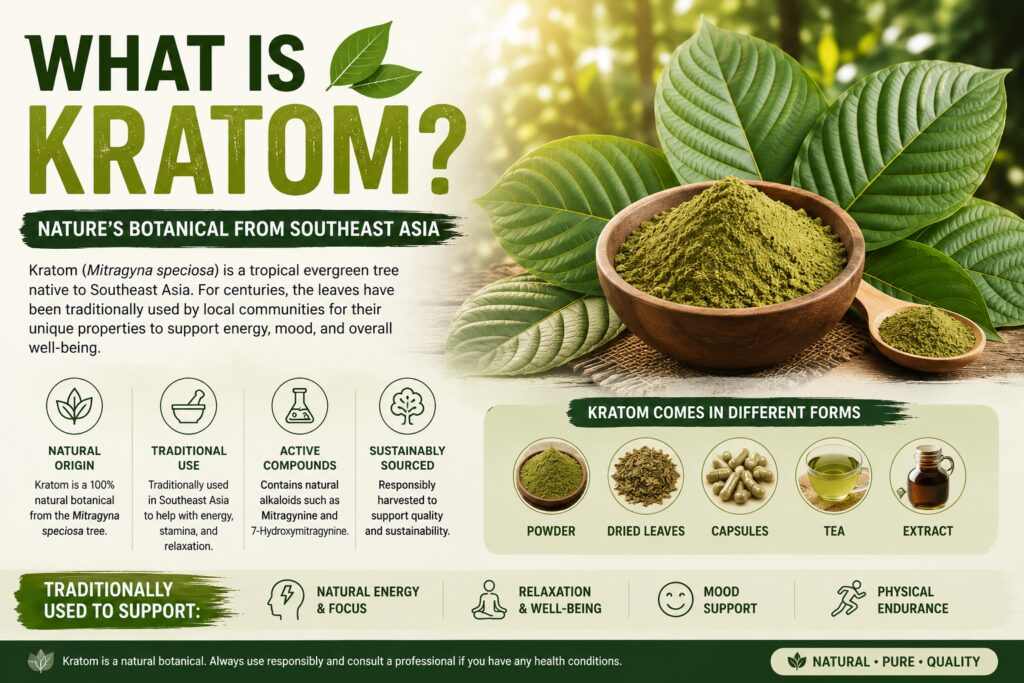
Kratom, scientifically known as Mitragyna speciosa, is a tropical evergreen tree native to Southeast Asia. For centuries, the leaves of this tree have been traditionally used by indigenous populations for their unique properties. In recent years, Kratom has gained significant attention worldwide, prompting many to ask: what exactly is Kratom?
What is Kratom? Understanding Its Origins
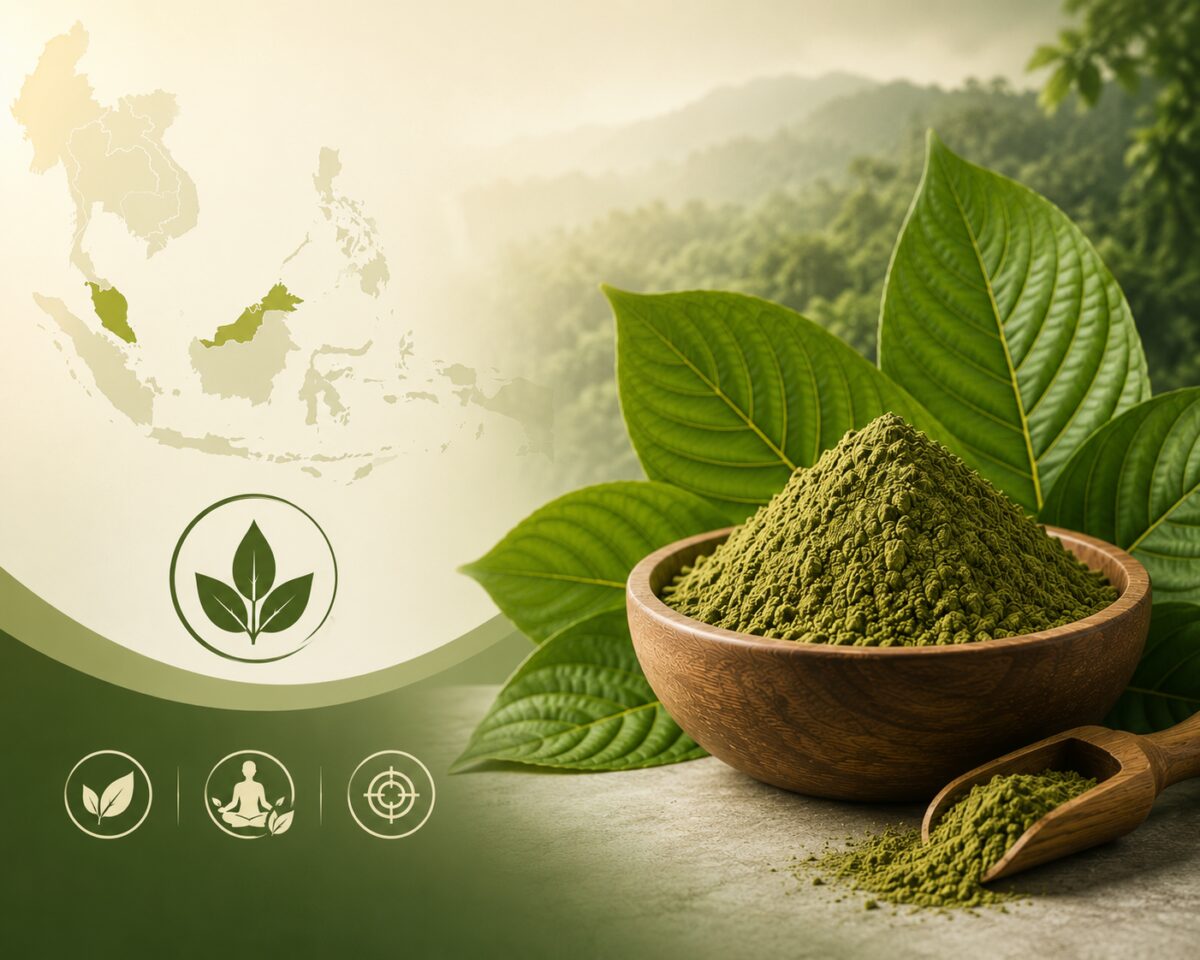
Kratom is a member of the coffee family (Rubiaceae). It thrives in the lush rainforests of countries like Thailand, Malaysia, Indonesia, and Papua New Guinea. Historically, laborers and farmers in these regions would chew fresh Kratom leaves or brew them into a tea to combat fatigue, improve endurance, and elevate mood during long, strenuous workdays. Its traditional uses are deeply embedded in the cultural practices of these areas.
The Active Compounds: Alkaloids
The primary reason for Kratom’s effects lies in its rich profile of active compounds, known as alkaloids. The two most prominent alkaloids are Mitragynine and 7-hydroxymitragynine. These compounds interact with receptors in the body, which is believed to be responsible for the plant’s diverse range of effects. Different strains of Kratom, ofteamed after their origin or the color of their leaf veins (e.g., Red Vein, Green Vein, White Vein), are thought to have varying alkaloid profiles, leading to different reported outcomes.
Common Forms of Kratom
When Kratom leaves are harvested, they undergo a drying process and are then typically ground into a fine powder. This powder is the most common form found on the market. Other popular forms include:
- Capsules: Pre-measured doses of Kratom powder encapsulated for convenience.
- Extracts: Concentrated forms of Kratom alkaloids, often more potent than plain powder.
- Tinctures: Liquid extracts that are taken sublingually or mixed with drinks.
Considerations for Use
While Kratom has a long history of traditional use, it’s essential for new users to understand that its legality varies significantly across different countries and even within regions. Responsible use and sourcing from reputable vendors are crucial. Users should also be aware of potential effects and consult with a healthcare professional if they have any underlying health conditions or are taking other medications.
Conclusion
In essence, Kratom is a botanical with a rich history, known for its unique alkaloid content and traditional uses in Southeast Asia. As interest continues to grow globally, understanding its origins, compounds, and various forms is key to appreciating this ancient plant. For those interested in exploring high-quality Kratom powder, visit kratom.my.id.